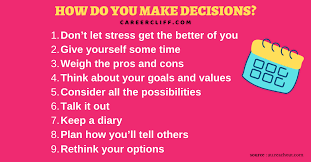
Life rarely moves in a straight line. Just when we think we have the map memorized, the terrain shifts. You might face a career pivot, a cross-country move, a relationship shift, or retirement. These moments, while often exciting, can also be paralyzing. The weight of the unknown presses down, making even simple choices feel impossible.
The Paralysis of the Unknown
Why do major life changes often leave us stuck in analysis paralysis? Usually, it’s not the decision itself that stops us, but the fear of making the wrong one. We worry about regret. We worry about what others will think. We worry about financial instability or losing our sense of identity.
These fears act as mental roadblocks. You might find yourself endlessly researching options without ever taking action, or perhaps you avoid the topic entirely, hoping the decision will make itself. Acknowledging these obstacles is the first step toward overcoming them. Fear is a signal that something matters to you, not necessarily a stop sign. When you identify the specific fear driving your hesitation—whether it’s fear of failure, judgment, or scarcity—you can begin to address it directly rather than letting it run the show.
Practical Steps for Confident Decision-Making
Confidence isn’t a personality trait; it’s a skill you build through action. When facing a crossroads, you can rely on a structured approach to cut through the noise and focus on what truly matters.
1. Clarify Your Values
Before you look outward at your options, look inward at your values. What is non-negotiable for you right now?
If you are considering a career change, are you prioritizing higher income, creative freedom, or work-life balance? If you are moving, is proximity to family more important than adventure? When your decisions align with your core values, they feel right, even if they are difficult.
Take time to write down your top three to five values. Use these as a compass. When you evaluate an option, ask yourself: “Does this choice bring me closer to what I value most?” If the answer is no, it doesn’t matter how good the opportunity looks on paper; it likely isn’t the right fit for you.
2. Gather Information and Seek Advice
Uncertainty feeds on a lack of information. Once you know what you value, start filling in the blanks. Research your options thoroughly, but set a deadline to prevent endless scrolling.
This is also the time to consult experts. If your life change involves significant assets or income shifts, speaking with a financial advisor and financial planner in St. George can provide objective clarity on the economic impact of your choice. If it involves legal matters, consult an attorney. If it’s a career move, talk to people currently in that role.
However, be selective about whose advice you internalize. While friends and family mean well, their advice is often filtered through their own fears and biases. Differentiate between expert counsel and well-meaning opinion.
3. Assess the Risks and Make a Plan
Blind optimism isn’t confidence; preparedness is. Take a hard look at the potential downsides of your decision. What is the worst-case scenario? If that scenario happens, could you handle it?
Often, our brains catastrophize, creating nightmare scenarios that are unlikely to occur. By writing down the risks and brainstorming solutions for them, you strip them of their power. For example, if you fear a new business venture will fail, your plan might include keeping a part-time job or setting aside a specific emergency fund before you launch.
Creating a “Plan B” doesn’t mean you are planning to fail. It means you are smart enough to pack a parachute. Knowing you have a safety net allows you to leap with greater assurance.
Building Your Support System
No one should have to navigate major transitions alone. The people around you can be a source of strength, perspective, and encouragement.
Identify the people in your life who are “builders”—those who listen without judgment and encourage your growth. Share your thoughts and fears with them. Sometimes, simply vocalizing a worry makes it seem less daunting.
Additionally, consider looking for communities of people going through similar changes. Whether it’s a support group for new parents, a networking circle for entrepreneurs, or an expat community, connecting with others who understand the specific nuances of your transition can be incredibly validating. You realize you aren’t the only one feeling this way, and that perspective alone can be grounding.
Conclusion
Trust yourself. You have navigated challenges before, and you have the resilience to handle whatever comes next. By clarifying what matters, doing your homework, and leaning on your support system, you can step into your new chapter not with fear, but with the excitement of possibility. The goal isn’t to eliminate all doubt, but to move forward in spite of it.